
WHAT CAN I DO
Bridge Program:
Leadership and Workforce
Readiness Under Pressure
The decision-making, behavioral awareness, and leadership skills that allow a young person to operate effectively especially when situations are unclear, high-pressure, or rapidly changing. This is what Bridge is designed to build.

THE PROBLEM
The Leadership and
Workforce Gap Is Real and Growing
Scenario
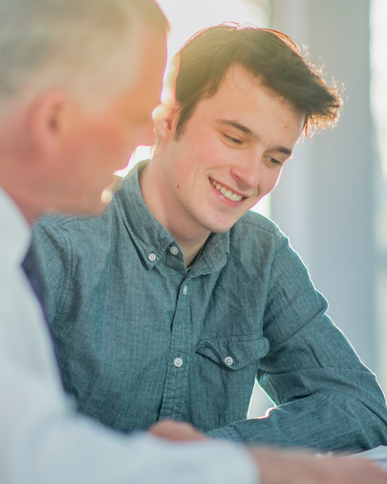
A student is pulled into a tense situation; conflict with peers, a difficult group decision, a moment where others are looking to them for direction. Instead of reacting, avoiding, or following the crowd, they pause. They read the situation. They choose how to respond not just what feels right in the moment, but what leads to the outcome they want.
This isn’t instinct. It’s learned capability. And most students graduate without it.
They’re right that it can’t be taught through a worksheet. They’re wrong that it can’t be taught at all.
Employers consistently report that recent graduates lack:
- Decision-making ability under pressure
- Leadership in complex, ambiguous situations
- Ability to read people and navigate social dynamics
- Problem-solving when answers aren't clear
- Adaptability in rapidly changing environments
Traditional education teaches content knowledge. Bridge teaches operational capability and the ability to function effectively when situations are high-pressure, unclear, fast-moving, and dependent on influencing others.
This is the politically safe frame that works in any district with any board: workforce readiness, leadership, character. And it’s designed to deliver the behavioral outcomes that matter.
WHAT STUDENTS LEARN
Skills That
Determine Success
Not what leadership is but how to execute it.
Decide When It Counts
Students learn to:
- Make decisions with incomplete information
- Assess situations quickly and accurately
- Weigh consequences in real time
- Act decisively when delay creates risk and commit
Example: During a group project crisis with a deadline approaching, a student evaluates options quickly, makes a call, and gets the team moving instead of freezing or waiting to be told what to do.
Lead When Things Are Unclear
Students practice:
- Staying calm when situations are chaotic and outcomes are uncertain
- Making progress when there is no clear answer
- Managing conflict without escalation
- Maintaining control of themselves when they can't control the circumstances
Example: When a plan falls apart and everyone is panicking, a student doesn’t have all the answers but they keep the team focused, assess options, and move forward.
See What Others Miss
Students develop:
- Ability to read body language, tone, and hidden signals
- Recognition of what's being left unsaid
- Assessment of group dynamics and power structures
- Understanding of motivations beneath surface behavior
Example: In a tense conversation, a student notices hesitation and asks a different question uncovering the real issue instead of arguing about the surface problem.
Move People to Action
Students learn to:
- Communicate clearly when stakes are high
- Influence without authority through leading from any position
- Build trust quickly with people they've just met
- Get buy-in for difficult decisions
Example: A student needs teammates to commit to extra work. Instead of demanding or guilting, they frame the stakes, make the case, and people follow.
HOW IT WORKS
Experiential Learning
in High-Pressure Scenarios
Bridge isn’t taught through lectures or worksheets. Students are placed into challenging scenarios that require real decisions, real leadership, and real consequences. Facilitated by people who have operated in environments where failure wasn’t an option.
Duration: Flexible Group Size: 12-18 students
Grade Levels: 9th-12th grade & College undergrads Delivery: In-school, after-school, or intensive weekend format
Teacher Prep Required: Under 15 minutes per session
SESSION One
What Leadership Actually Is
Not about titles or authority but about influence, judgment, and execution.
Session Two
Decision-Making Under Pressure
Scenarios requiring quick decisions with limited information. Practice assessing, choosing, and committing.
Session Three
Reading the Room
What's happening beneath the surface. Body language, tone, power dynamics, hidden agendas.
Session Four
The Pause That Changes Everything
Creating space between stimulus and response and knowing exactly when to use it.
Session Five
Conflict Without Escalation
Handling disagreement, tension, and opposition without losing control or making it worse.
Session Six
Leading When You're Not in Charge
Influence without authority. Most leadership happens without a title.
Session Seven
Communication Under Pressure
What to say, how to say it, and what to leave unsaid when stakes are high.
Session Eight
Building Trust Quickly
What makes people follow? How do you earn credibility fast? What destroys it instantly?
Session Nine
Complex Problem-Solving
Multi-variable problems with no clear answer. Practice working through ambiguity to action.
Session Ten
Pressure Testing
High-intensity scenarios that require everything learned so far. Full debrief.
Sessions Eleven & Twelve
Integration and Real-World Application
How to apply these skills in internships, college, and first jobs. Building habits that hold.
WHAT MAKES BRIDGE DIFFERENT
This Isn't Theory.
It's Performance.
Traditional Leadership Education:
- Teaches about leadership
- Focuses on concepts and definitions
- Low-pressure classroom environment
- Individual work and written assignments
- One right answer
Bridge Program:
- Teaches how to lead
- Focuses on execution and behavior in real scenarios
- High-pressure, realistic conditions
- Group dynamics, real-time decisions, real consequences
- Judgment in ambiguity; the actual skill employers test for
The Difference: Bridge is designed so students don’t just learn the theory of leadership but they practice leading: making decisions under pressure, influencing outcomes, handling conflict. They’ve practiced the only skills that actually transfer to the workplace.
WHO DELIVERS BRIDGE
Facilitators Who've
Operated Under Real Pressure
Bridge facilitators aren’t just educators — they’re people who have made high-stakes decisions in environments where failure wasn’t an option. Military veterans, business leaders, veteran coaches, crisis responders.
They know what leadership looks like when things go wrong. They know how to read a room, make a call, and live with the consequences. They teach students to do the same — and students can tell the difference.
WHAT CHANGES
Observable Outcomes
Measurable improvements in decision-making, leadership, and workforce readiness.
Decision-Making Ability
Students Demonstrate:
- Faster, more confident decisions
- Better consequence assessment
- Improved judgment in ambiguous situations
- Willingness to commit and follow through
- Ability to adjust when wrong without shutting down
Leadership Behavior
Students Show:
- Greater willingness to step up
- More effective peer influence
- Better conflict de-escalation
- Increased trust from peers and adults
- Stronger communication under pressure
Situational Awareness
Students Develop:
- Ability to read people and group dynamics
- Recognition of what's actually happening vs. what's being said
- Faster pattern recognition in complex situations
- Better anticipation of problems before they escalate
Workforce Readiness
Students are Prepared For:
- Internships and first jobs — showing up differently than peers
- College team projects and leadership roles
- Fast-paced, ambiguous environments
- Career advancement through demonstrated judgment
WHO IT’S FOR
Designed for College-Bound and University Enrolled Students
High School &
College Undergrads
When to Use: 11th and 12th grade students college or college undergrads preparing for starting their careers
What It Provides: Advanced capability that differentiates them in admissions, interviews, and first-year performance
Typical Outcome:
Competitive advantage in college admissions, stronger performance in year one
Student
Leaders
When to Use: Students in or seeking leadership positions through athletics, clubs, student government, team captains
What It Provides: Skills to lead effectively, not just hold a title
Typical Outcomes:
More effective leadership, stronger team culture, better outcomes
CTE and Vocational Students
When to Use: Students in career and technical programs entering the workforce directly
What It Provides: Practical job-readiness soft skills that differentiate them from other candidates
Typical Outcomes:
Better job placement, faster advancement, stronger employer relationships
Post-Anchor Advancement
When to Use: Students with a strong identity foundation from Anchor who are ready for advanced capability building
What It Provides: The complete development arc — from who I am to what I can do
Typical Outcomes:
Full system completion through awareness, identity, capability
Parent Component
We Include
Parents in the Process

Students can’t apply these skills in a vacuum. The Distraction Program includes a parent education component so families can reinforce learning at home — and recognize warning signs before situations escalate.
What Parents Receive:
- Overview of what students are learning and why
- Understanding of the specific digital risks students face right now (including sextortion)
- Conversation starters — actual scripts for the conversations parents don't know how to begin
- Warning signs to watch for by age group
- When and how to use CyberSafely.ai awareness tools
- Connection to ongoing parent support community
Parent Workshop: 2-hour session (in-person or virtual)
Frequently Asked Questions
What Administrators
Ask About Bridge
How is this different from existing leadership programs?
Most leadership programs teach concepts. Bridge creates conditions where students practice actual leadership behaviors under pressure — with real decisions, real group dynamics, and real debrief. The Harris Poll data showing 82% of managers reporting Gen Z interpersonal skill gaps is the problem Bridge addresses directly.
Is this ESSA-aligned?
Yes. Bridge is designed to align with ESSA evidence standards for student outcomes. Documentation is available for state reporting purposes.
Can this satisfy state requirements around workforce readiness or career preparation?
In many cases, yes. We provide documentation supporting alignment to state CTE and workforce readiness standards. Request a consultation to map your state's specific requirements.
Is it pulled out or pushed into the school day?
Bridge is designed to be delivered in advisory periods, health class, or pulled out for cohorts — with minimal disruption to the academic schedule. We work with your schedule in the consultation phase.
What's the scope and sequence across grade levels?
Bridge is designed for 9th-12th grade. Combined with Distraction (6th-9th) and Anchor (6th-12th), the full system provides a grades 6-12 scope and sequence that articulates across the district. We provide the grade-level mapping in the consultation.
Implementation Options
Bring This
Program to Your School
Pilot
Program
What's Included:
- Customizable program
- One cohort (12-18 students)
- All curriculum materials (externally facilitated)
- Parent information session
- Pre and post assessment with results report
COMPREHENSIVE Implementation
What's Included:
- Multiple cohorts, 11th and 12th grade
- Extended parent programming
- Staff professional development
- Ongoing consultation
Related Programs
Bridge Builds
on Strong Foundation
Build
Foundation First
Bridge works best when students have identity and emotional grounding in place. Anchor builds that foundation so students can handle the pressure Bridge creates without it overwhelming them.
Address
Urgent Needs First
For schools or students with immediate digital safety concerns, start there. Distraction provides the crisis response and early intervention foundation that prepares students for deeper development.
Bridge Program:
Part of a Connected System
Distraction creates awareness. Anchor builds stability. Bridge develops capability.
Bridge can stand alone as an entry point for communities focused on leadership, communication, and future readiness. It can also take what they’ve decided and help move something forward.
Ready to Bring
Bridge to Your School?
Bridge is ready to move from a developed program concept into a real learning environment. We are seeking a school willing to help students practice communication, adaptability, and leadership and a founding corporate partner willing to make that opportunity possible.
The school creates the place to learn. The sponsor helps create the opportunity to test, measure, and improve.
The first pilot will not prove everything. It will show us what students recognize, how they respond, and what the program must become next.