
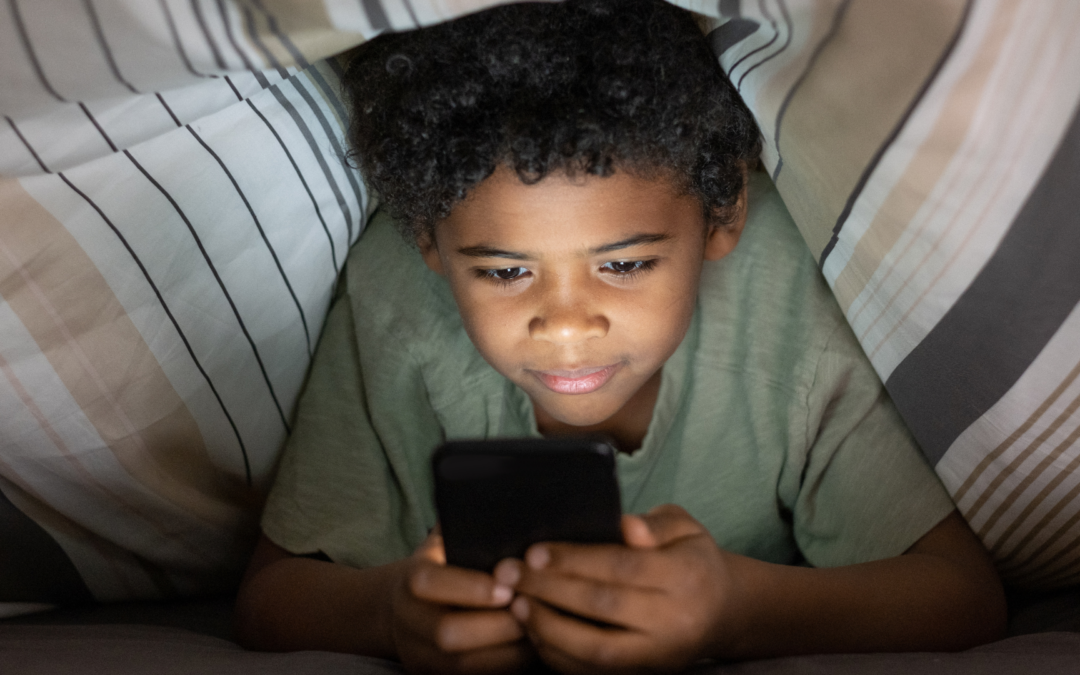
Childhood has changed.
Today’s children are growing up in a world where smartphones are not just tools, they are constant companions. From the moment they wake up to the moment they fall asleep, many children are connected to a digital environment that is always on, always stimulating, and often overwhelming.
While technology offers undeniable benefits, research is increasingly clear: excessive screen exposure is reshaping childhood in ways we cannot ignore.
At CyberSafely Foundation, we believe that awareness is the first step toward protection. Understanding the deeper impact of a phone-based childhood allows parents to make informed, confident decisions for their families.
A Growing Reality: What the Data Shows
Children today are spending more time on screens than ever before.
- Studies show that daily screen time among children has increased from 5 hours to nearly 8 hours per day over the past decades
- Screen exposure of 2 hours or more per day significantly increases the risk of sleep disruption
- Children with high screen use are more likely to experience anxiety, depression, and behavioral challenges
This is not just a lifestyle shift, it is a developmental shift.
And at the center of this transformation are four key areas of harm.
1. Social Deprivation
Human connection is the foundation of childhood development.
Through face-to-face interactions, children learn empathy, emotional regulation, communication, and belonging. These are not optional skills, they are essential for life.
But when screens replace in-person connection, something is lost.
Children who spend more time on devices may:
- Have fewer real-world social interactions
- Struggle with emotional understanding
- Feel isolated despite being constantly “connected”
Research consistently shows that increased screen use is linked to challenges in social and emotional development
Digital communication cannot fully replace the depth of real human connection, and children feel that gap.
2. Sleep Deprivation
Sleep is critical for a child’s brain, body, and emotional health.
Yet, screens are one of the biggest disruptors of healthy sleep.
- Children exposed to screens are 42% more likely to have shorter sleep duration
- Even moderate smartphone use is linked to reduced sleep quality and shorter total sleep time
- Millions of children are getting less than the recommended 8–12 hours of sleep
Late-night scrolling, notifications, and blue light exposure all interfere with the body’s natural sleep cycle.
And when sleep suffers, everything else follows:
- Mood
- Learning
- Behavior
- Mental health
Sleep is not just rest, it is the foundation of healthy development.
3. Attention Fragmentation
Children today are growing up in a world of constant interruption.
Notifications, short-form videos, and endless scrolling train the brain to expect quick rewards and constant stimulation.
Over time, this changes how attention works.
Research shows that higher screen use is associated with:
- Difficulty concentrating
- Reduced attention span
- Challenges in learning and problem-solving
Instead of deep focus, children are developing fragmented attention—jumping from one stimulus to the next.
And attention is not just an academic skill. It is essential for:
- Critical thinking
- Emotional regulation
- Long-term success
4. Addiction
Modern digital platforms are designed to capture and hold attention.
For developing brains, this can lead to patterns of dependency that go far beyond “screen time.”
Children may experience:
- Difficulty putting devices down
- Compulsive checking and scrolling
- Anxiety when disconnected
Studies link excessive screen time (4+ hours daily) to higher risks of:
- Anxiety (45% increase)
- Depression (65% increase)
- Behavioral issues and ADHD symptoms
This is not simply about habits, it is about how technology interacts with the brain’s reward system.
What Can We Do? The Four New Norms
While these challenges are serious, they are not irreversible.
Parents have more influence than they think.
We encourage families to consider four simple, powerful guidelines:
- No smartphones before high school
- No social media before age 16
- Phone-free schools
- More independence, free play, and real-world responsibility
These are not about restriction, they are about protection.
They give children the time and space to develop:
- Social skills
- Emotional strength
- Focus
- Independence
Before entering a complex digital world.
Final Thoughts for Parents
This is not about removing technology.
It is about restoring balance.
Children need more than screens. They need:
- Real conversations
- Real friendships
- Real challenges
- Real life
Because childhood is not meant to be lived through a device.
It is meant to be experienced.
At CyberSafely Foundation, we are committed to helping families navigate the digital world with awareness, confidence, and care—so children can grow up not just connected, but truly supported.